

In this week’s Folky Fridays free online guitar lesson live stream from Folk Friend I will be showing you how you can use the humble “power chord” as a super easy move-able chord option for Irish, Scottish and general Celtic guitar accompaniment in loads of different keys! If you’re looking for an easy way to super charge your chord armoury with just one shape then this will suit you down to the ground!
Author: Folk_Friend
In this week’s Folky Fridays free online guitar lesson live stream from Folk Friend I will be showing you a completely “by ear” approach to DADGAD backing, with almost no music theory! We’ll be covering tunes in the common keys of D major, G major, E minor and A minor and I’ll be showing you some simple approaches to make chord progressions which follow the melody, tune your ear in and sound absolutely great! We’ll be looking at bass runs and replicating the melody at the top end of your chords too.
I recently finished writing a complete Beginner’s Guide To Celtic DADGAD Accompaniment! You can find it here.
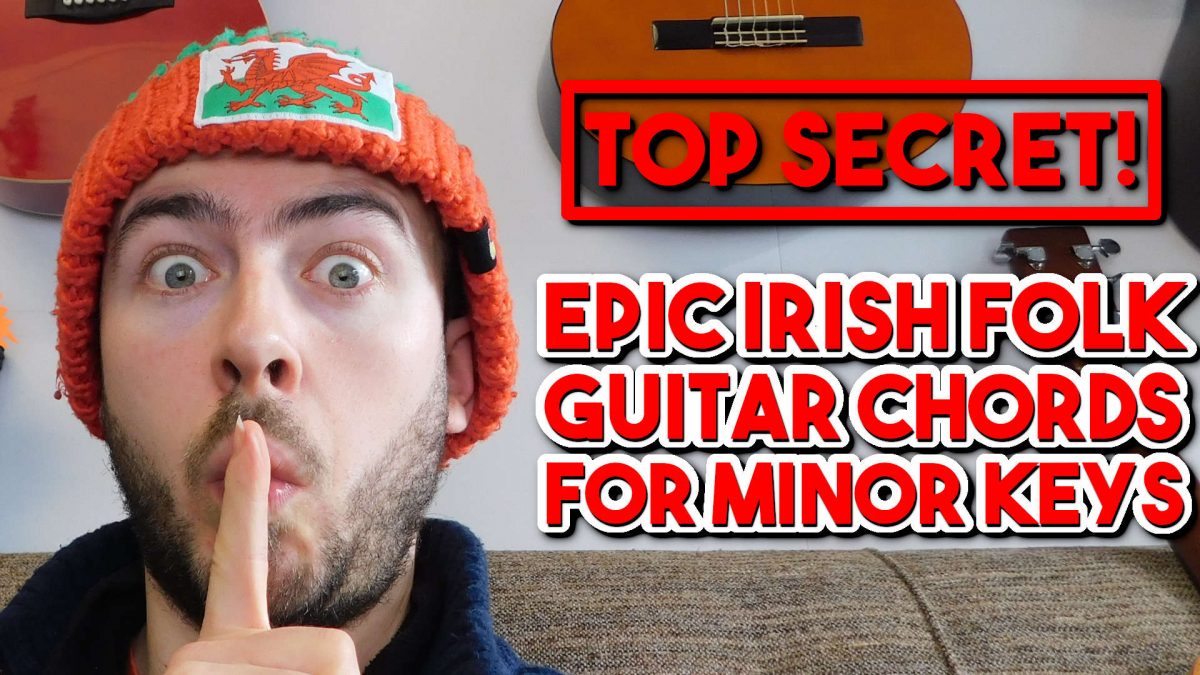
In this week’s free Irish guitar lesson from Folk Friend, I’m going to be letting you in on a little secret about backing tunes in minor keys… You can BLEND THE MODES! No longer will you be tied to either building chords from the dorian or aeolian mode… Now you can mix and match for super-cool chromatic effects!
I’ll be applying this mind boggling technique to my free playalong video for The Cliffs Of Moher which you can watch here:
In this week’s Folky Fridays free online guitar lesson live stream from Folk Friend I will be attempting to write a full DADGAD fingerstyle arrangement of a classic Irish reel called McMahon’s in under an hour!
The completed tab is now available as a free download! Get your copy here.
I also wrote a complete book of 10 DADGAD arrangements of classic Irish tunes, which you can buy as an e-book or paperback by clicking here. It comes with a playing guide for each tune, a short history of its provenance and author if known, chord diagrams, MIDI downloads and lots more!
I recently finished writing a complete Beginner’s Guide To Celtic DADGAD Accompaniment! You can find it here.
In this week’s Folky Fridays free online guitar lesson live stream from Folk Friend I will be running you through a few features of great sounding chord progressions.
In this week’s Folky Fridays free online guitar lesson live stream from Folk Friend I will be showing you the formula you can use to make any tune or song sound like gypsy jazz! This technique is a lot of fun and can be easily applied to any song or tune (traditional or otherwise!) – all it needs is a bit of music theory knowledge and a few new chord shapes!

Here is my final free playalong for you all- this time it’s a cracking Irish jig in A dorian called The Cliffs Of Moher. If you want any more you’ll have to click here to get the full pack of twenty, which each come with a detailed guide to why the chord choices work, the theory behind the substitutions, chord diagrams and loads more!

In this week’s free Irish guitar lesson from Folk Friend I’ll be running you how to pick chords by ear for the rarest and darkest of the “Celtic” modes, the aeolian. This is also sometimes called the “natural minor scale”.
I’ll be demonstrating using my free playalong for The Rights Of Man, which you can find here:
Here are the other videos in this series:

In this week’s free Irish guitar tutorial from Folk Friend I will be running you through a very popular modern session jig called Donegal Lass, written by Brian Finnegan of Flook fame. I will be showing you how you can analyse a melody by ear and quickly pick out the best chords to accompany it! I will also run you through basic guitar chord substitutions that you can use to add variation to your Irish guitar backing. This is also applicable to Scottish and Welsh folk music (and that of most of north western Europe).
Here are the other videos in this series:

This week on Folk Friend’s weekly Celtic guitar tutorial video I’ll be running you how to pick chords for Irish, Scottish and general Celtic music in the most common type of minor key, the dorian mode.
Here are the other videos in this series:
Part 3 (mixolydian)
Part 4 (aeolian)