


Basic chords
This tune is in the key of D ionian. That means that the available chords are D major, E minor, F# minor, G major, A major, B minor and C# diminished.
The third bar of the A part contains the notes “F# B B A B C# D B”. This sounds like a chord IV section to me, as G major contains G, B and D and two of the dominant beats in this bar are on B notes, which do not appear in chord I (D, F# A).
In the B part I have used an E minor (chord II) in the third bar. This is because the bar is basically running up the D major scale beginning from E, which is the same thing as saying “running up the scale of E dorian”. Of course an E minor chord fits nicely with an E minor scale!
Basic substitutions
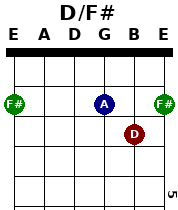
In this version I have used D/F#, aka the first inversion of D major, to provide a nice linking bassline from D up to G. You can play this chord by looping your thumb round the back of the neck so that it frets the second fret of the bottom E string.
In bar three, instead of going directly to chord V, A major, I have resolved to it from the chord which is a fifth above it within the key scale. You can always do this- if you have a whole bar or more of a given chord you can play the chord whose root is a fifth above it before the original chord. I have also replaced half of bar seven, which previously just contained G major, with its related minor E minor. A major chord’s related minor is always the one whose root note is two below its own in the key scale (in this case G – F# – E minor).
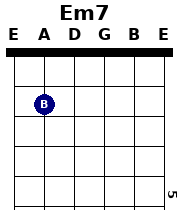
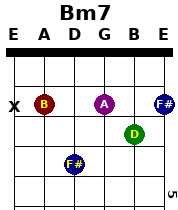
In the B part I have replaced G with its related minor, Em and D with its related minor, Bm. It is always acceptable to switch chords I and IV in any key to their related minors for variation. I have also used the first inversion of chord I, D/F#, in several places. This chord sounds like it wants to move up to G, so it can be a good way to add a sense of movement to your chord progressions.
Jazzy substitutions
In this version’s A part, I have used D in the first inversion, or D/F#, as a linking chord to create a sense of movement between chords I and IV (D and G). The G major in the second bar works because you can always replace a chord I section with chord IV if you wish to.
In bar three I have replaced G major with its related minor, E minor. The related minor of any major chord can be found by going two steps down in the key scale from any major chord- in this case G – F# – E (minor). I proceed up the chord scale from Em – D/F# (a substitute for the F# diminished chord) – G – A, in order to arrive at chord V for the second half of the chord V section in the fourth bar. Remember that bars 4, 8, 12, 16 etc (multiples of four) all take chord V!
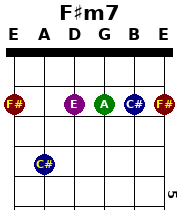
In bar 5 I have used both of the minor substitutions available for a D major chord- B minor and F# minor. B minor is the related minor of D major, and F# minor is the chord whose root note is two above D in the key scale. You can always substitute a chord for either the chord whose root note is two below it in the key scale, or the chord whose root note is two above it in the key scale. Both of these chords will have two notes in common with the original chord and so both will make good substitutes.
In bars seven and eight I have missed out the D/F# from my ascending chord run. This is because I have to get back to A in time to go from V – I at the end of the section. If I played the full ascending progression from the end of the first line, I would end the B part on chord V (A) instead of going from V back to I (D) to make it sound finished.
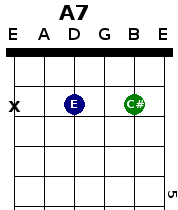
In place of A major I have used A7 as my chord V. You can always replace chord V in a major key with a dominant 7 chord, or any other dominant chord like a 9 or 13.
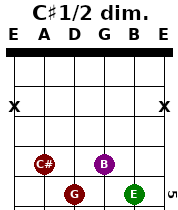
In the B part, just to show that it CAN be done, I thought I’d stick an actual chord VII in. I have used the tetrad (four note chord) form, C# ½ diminished in bar two. This chord contains the notes C#, E and G. An E minor chord would work well in this section, and this chord contains two of the same notes so it’s theoretically an acceptable option. You will probably find in practice that it doesn’t sound that great though- you could replace it with G, Em, D, Bm or loads of others!
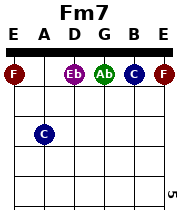
In bar six I have slid my F#m chord down one fret for the second half of the bar. This creates a nice chromatic link down to the E minor chord in the following bar. Any time you have two chords whose roots are separated by a tone, you can slide between them in this way using barre chords.
2 replies on “Maid Behind The Bar – D ionian”
In the play along, you have D# half diminished, I think you mean C# half diminished as this is the chord referred to elsewhere in the text.
Hi Brian. Sorry for slow response, only just seen your comment! It is actually MEANT to be D# 1/2 dim. It’s acting as a chromatic link from D up to E minor. That’s a technique I mentioned in the first book; any time you want to go to a chord whose root note is a tone above the current chord’s, you can create a jazzy chromatic linking chord by using the diminished or 1/2 diminished chord whose root is on the intervening semitone. In this case I have linked D to Em via D# 1/2 dim.